
How to Prepare Your Special Needs Child for Seeing Santa This Holiday Season
Meeting Santa is a magical tradition, but for many children with developmental, sensory, or communication needs, it can also feel overwhelming. New environments, long lines, bright lights, loud music, and an unfamiliar person in a big red suit can make the experience challenging.
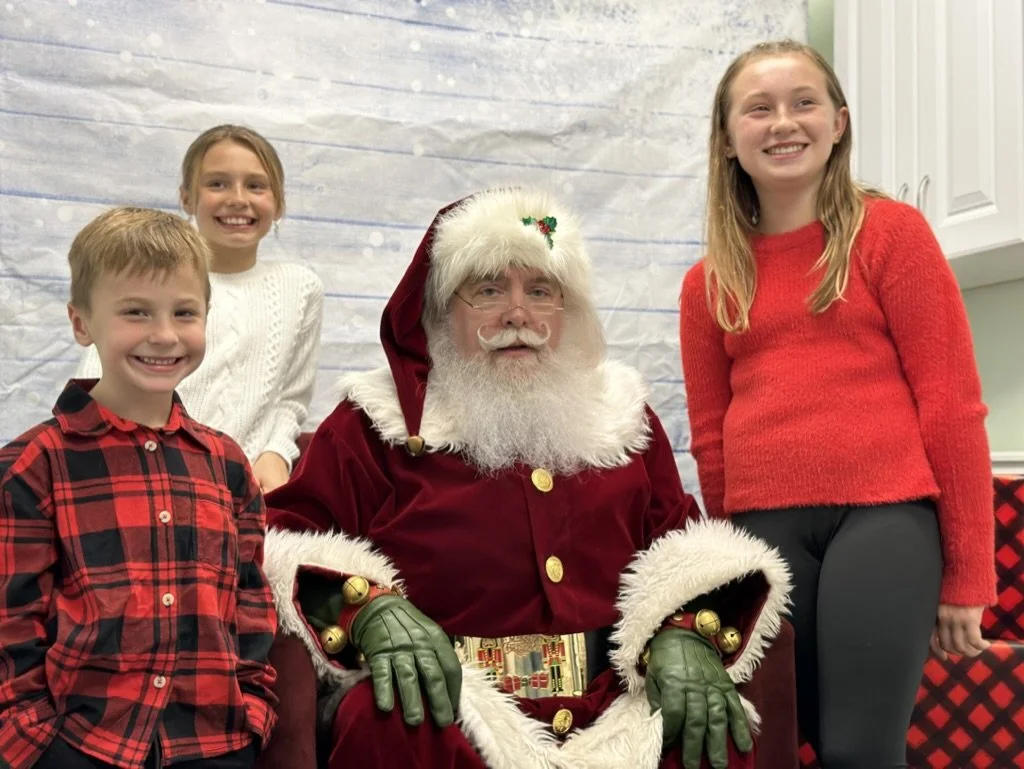
The good news? With planning, preparation, and the right supports, your child can enjoy their visit with Santa in a calm, positive way. ... or at least tolerate ;)

Here are simple, practical steps to help make the moment successful for your child—and for you.
1. Talk About Santa Ahead of Time 🎅
Many children feel more comfortable when they understand what to expect. In the days before your visit:
Look at pictures of Santa
Read Santa-themed books
Watch short videos of children meeting Santa
Show pictures of the location (the mall, sensory-friendly event, etc.)
Using an AAC device? Explore words like SANTA, HELLO, LOOK, NICE, GIFT, BYE, I WANT, NO THANK YOU
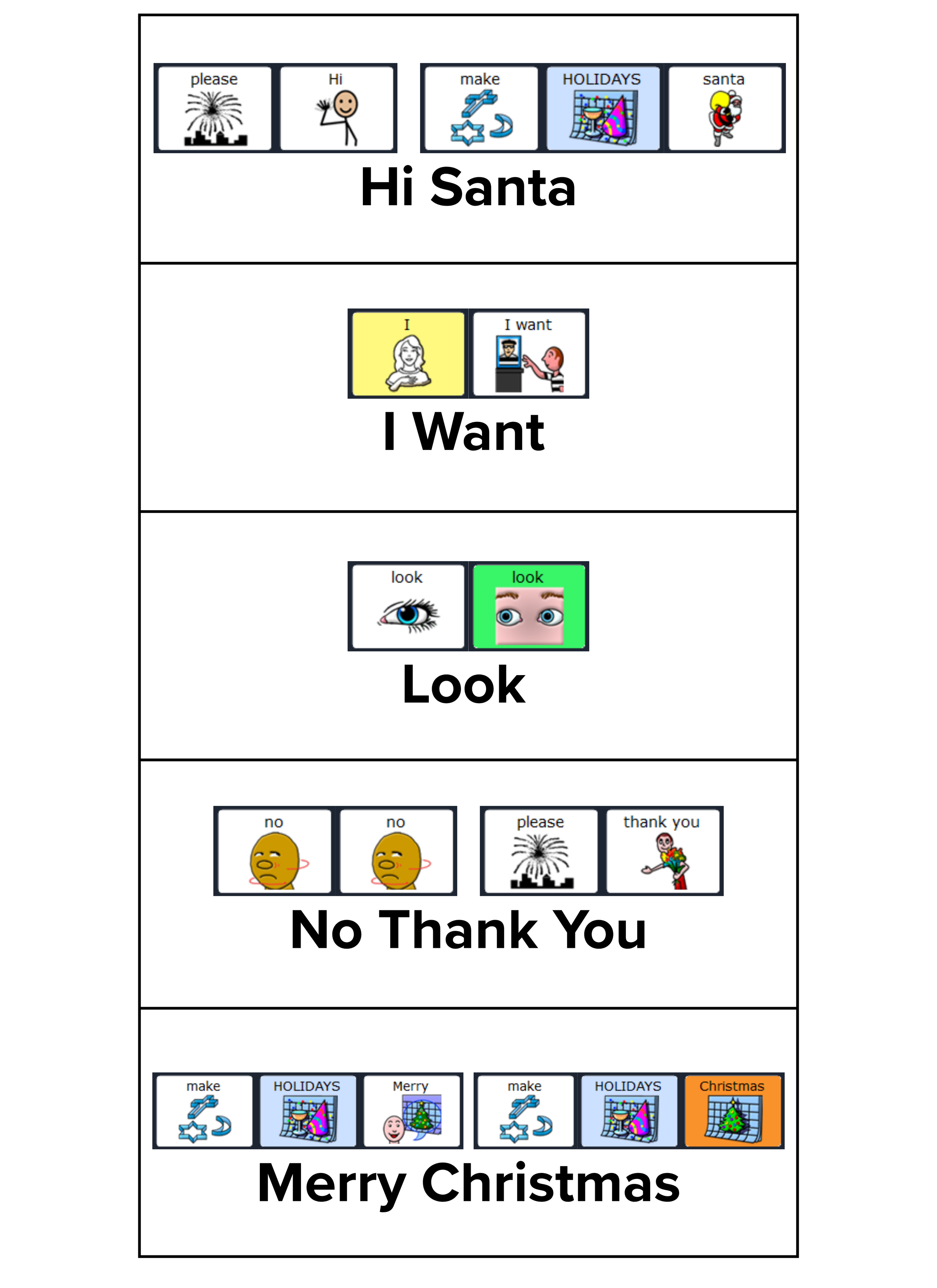
Previewing helps reduce surprises.
🗣️ 2. Practice Communication Before the Visit
Whether your child speaks, signs, or uses AAC, it helps to rehearse a few simple phrases. Keep it light and low-pressure.
Try practicing:
“Hi Santa”
“I want ___”
“Look!”
“No thank you”
“All done”
“Merry Christmas”
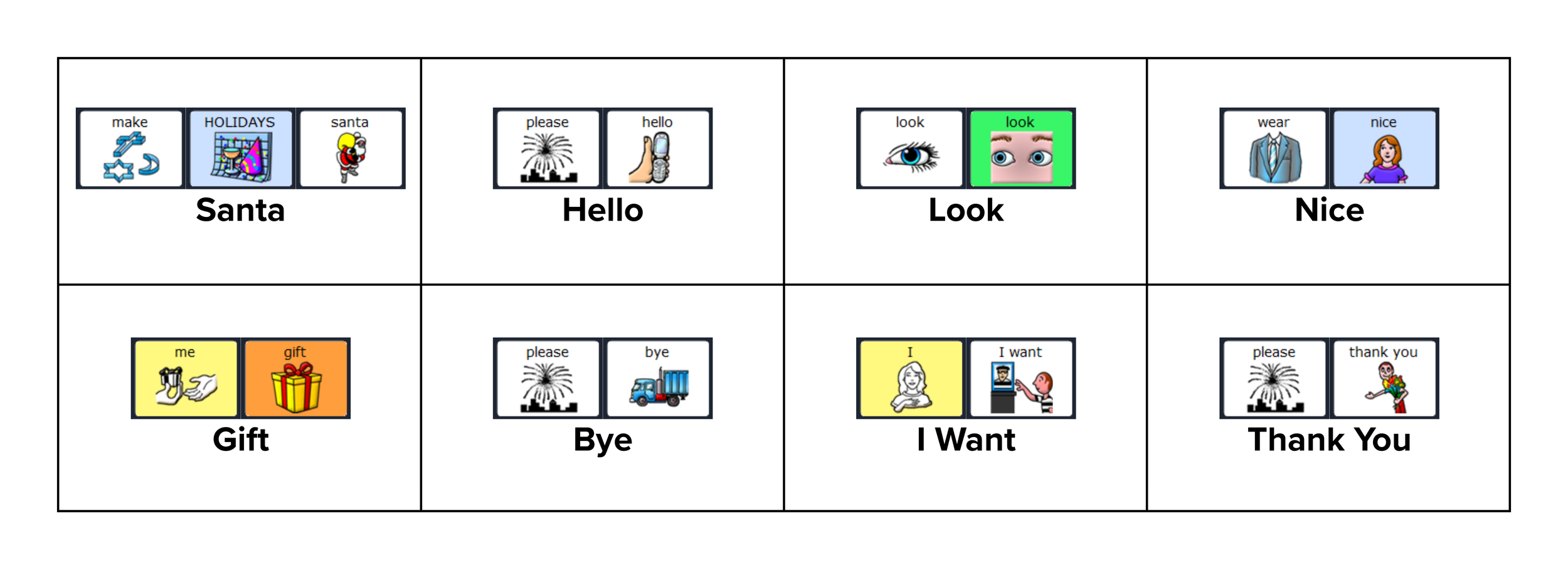
You can even create a small Santa page or holiday fringe board on your child’s device so vocabulary is easy to access.
🧠 3. Prepare for Sensory Needs
Santa visits can be sensory-heavy. Think ahead about what your child may need to feel comfortable:
Noise-canceling headphones
Sunglasses or a hat
A favorite toy or fidget
Snacks
A weighted lap pad
A visual schedule
A social story
If your child struggles with crowded or noisy environments, consider attending a sensory-friendly Santa event where lights are softer, lines are shorter, and expectations are flexible.
📅 4. Choose the Right Time
Your timing can make or break the experience.
Try to visit:
On a weekday
Earlier in the day
During sensory-friendly hours (many malls now offer these!)
Avoid peak times when lines are long and the environment is overstimulating.
5. Use a Social Story to Explain What Will Happen 📸
A social story helps your child visualize the plan and reduce uncertainty.
Include important steps like:
“We drive to see Santa.”
“We wait with Mommy/Daddy.”
“I can sit or stand near Santa.”
“I do not have to sit on Santa’s lap.”
“I can say hello using my words, signs, or device.”
“When I’m all done, we go home.”
(If you want, I can create a custom Santa social story with visuals! Send us an email here!)
6. Follow Your Child’s Comfort Level 🤗
Some children prefer:
Sitting beside Santa
Standing in front of Santa
Sitting with a parent
Waving from a distance
Taking a picture near the Santa area without interacting
All of these are perfectly okay.
The goal is comfort—not a “perfect picture.”
🎁 7. Celebrate Success—Big or Small
After the visit:
Label and praise what went well
Celebrate communication attempts, even tiny ones
Let your child choose a fun activity afterward
Your child’s effort is what matters most.
❤️ 8. Remember: There Is No One “Right” Santa Experience
For some children, seeing Santa is magical. For others, it’s stressful—and that’s okay.
Your child may:
Wave
Glance
Smile
Look away
Avoid
Or simply be “all done”
Every response is valid.
What matters is creating a holiday moment that feels safe, supported, and joyful for your child.
With preparation, practice, and flexibility, your child can have a successful Santa experience tailored to their needs. Focus on connection over perfection, communication over performance, comfort over tradition.
Your child deserves holiday magic—at their own pace and in their own way. Send us an email if you need communication support during this moment.
